
Screens and Eye Strain: Practical Ways to Protect Your Eyes
14 June 2026 · By EyeCare.mu · Updated 17 June 2026
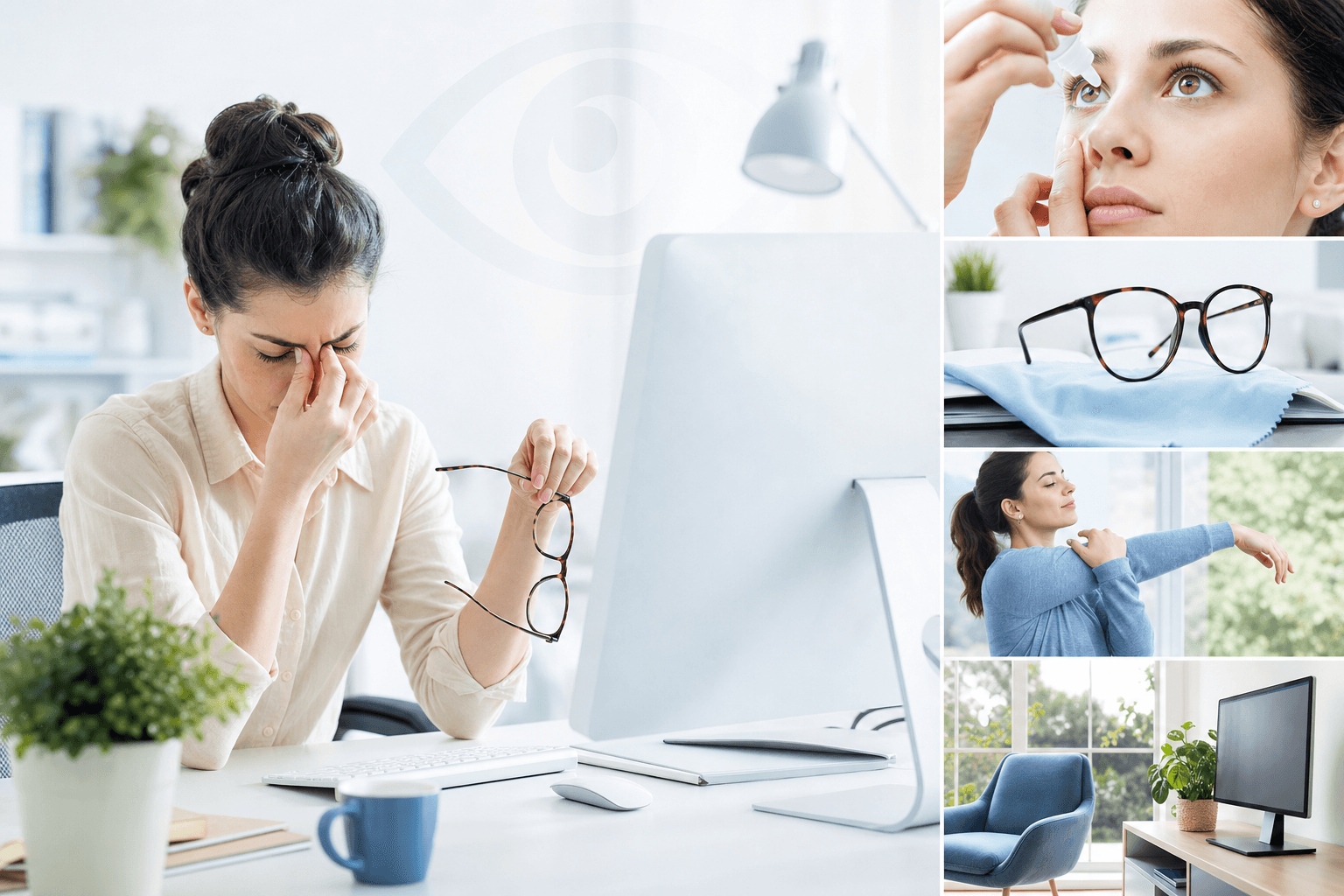
Many of us spend hours each day looking at phones, computers, tablets, and televisions. It is no surprise that tired, dry, or aching eyes have become a common complaint. The good news is that screen-related eye strain, sometimes called digital eye strain or computer vision syndrome, is usually temporary and very manageable. With a few simple habits, most people can keep their eyes comfortable even during long days of screen use.
What screen eye strain actually is
Eye strain from screens is not a disease and it does not cause permanent damage to your eyes. It is a collection of symptoms that come from using your eyes intensively for long periods. When you focus on a screen, your eyes work hard to stay sharp on a fixed distance, and you tend to blink far less often than normal. Less blinking means the surface of the eye dries out, which leads to that gritty, tired feeling.
Screens themselves do not emit harmful radiation, and current evidence does not show that normal screen use harms the structure of the eye. The discomfort comes from how we use our eyes when we look at screens, not from the screens damaging them.
Common symptoms to watch for
People describe screen eye strain in different ways. You might notice:
- Tired, sore, or burning eyes
- Dryness or a feeling of grittiness
- Blurred vision, especially when looking from the screen to something far away
- Headaches, often around the forehead or temples
- Difficulty focusing after long screen sessions
- Neck, shoulder, or back ache from poor posture
- Increased sensitivity to light
These symptoms usually ease once you rest your eyes or finish the task. They tend to build up over the course of a long day rather than appearing suddenly.
Practical ways to protect your eyes
Small changes make a real difference, and most cost nothing at all.
Follow the 20-20-20 rule. Every 20 minutes, look at something about 20 feet away (around 6 metres) for at least 20 seconds. This gives the focusing muscles in your eyes a short rest. Setting a gentle reminder on your phone can help you remember.
Blink more often, on purpose. When concentrating, we blink less. Make a conscious effort to blink fully and regularly. If your eyes still feel dry, lubricating eye drops (often called artificial tears) can help. A pharmacist or eye care professional can recommend a suitable product.
Adjust your screen setup. Position the top of your screen at or just below eye level, about an arm's length away. Reduce glare by angling the screen away from windows and bright lights. Clean the screen regularly, since dust and smudges make your eyes work harder.
Get the brightness and text right. Match your screen brightness to the light in the room. A screen that glows much brighter than its surroundings is tiring. Increase text size if you find yourself squinting or leaning in.
Mind the room lighting. Avoid working in a very dark room with a bright screen, or in harsh light that bounces off the display. Soft, even lighting is most comfortable.
Stay hydrated and take real breaks. Drinking enough water supports healthy tear production. In Mauritius, where fans and air conditioning are common, moving air can dry the eyes further, so keep vents pointed away from your face when you can.
Be sensible with night-time use. If screens at night make your eyes feel strained, dim the display and use night or warm-colour settings. There is no strong proof that blue-light filtering glasses prevent eye strain, so do not feel you must buy them. Simple habits work just as well.
When to seek professional care
Most eye strain settles with rest and better habits. However, it is worth booking an eye examination if:
- Symptoms persist even when you reduce screen time
- You have frequent headaches or ongoing blurred vision
- You notice double vision
- One eye seems to work harder than the other, or you tilt your head to see clearly
- Your eyes are very red, painful, or sensitive to light beyond mild discomfort
- You see flashes, floaters, or any sudden change in vision
These last symptoms, especially flashes, new floaters, or sudden vision loss, are not typical of screen strain and should be checked promptly. Sometimes persistent strain is a sign that you need glasses, or that an existing prescription needs updating. Children who spend a lot of time on screens should also have regular eye checks, since they may not mention difficulty seeing.
This article is general education and is not a substitute for personalised advice from a qualified eye care professional who can examine your eyes.
A calm takeaway
Screen eye strain is common, understandable, and almost always temporary. Your screens are not damaging your eyes, and the discomfort is your body asking for a short rest and a few sensible adjustments. Remember to blink, take regular breaks, set up your screen comfortably, and look into the distance now and then. If symptoms linger or anything feels unusual, a simple eye examination can put your mind at ease and keep your vision in good shape for years to come.
Clear vision supports a fuller, healthier life. Explore the wider Medtech health ecosystem.