
Common Eye Symptoms and When They Need Urgent Attention
15 June 2026 · By EyeCare.mu · Updated 17 June 2026
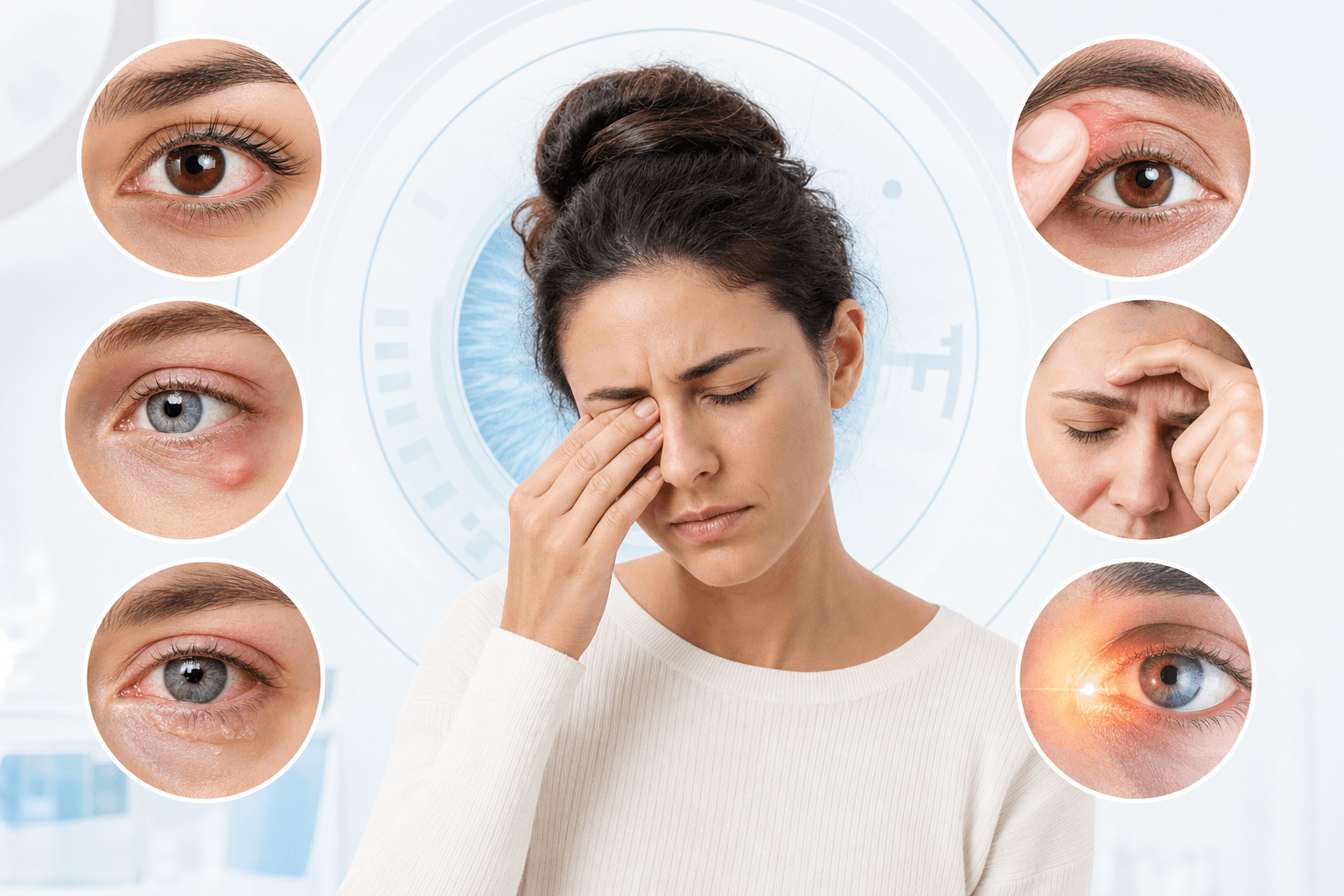
Eyes are remarkably good at telling us when something is wrong. Most of the time the message is minor, a little tiredness, dryness, or irritation that settles on its own. Occasionally, though, an eye symptom is a signal that needs prompt attention. Knowing the difference helps you stay calm while still acting quickly when it genuinely matters.
Everyday symptoms that are usually harmless
Many eye complaints are common and rarely serious. A gritty, dry, or tired feeling after a long day at a screen is one of the most frequent. Mild redness from dust, smoke, or a late night, occasional watering, and brief twitching of the eyelid usually pass within hours or a day or two.
Floaters, those small specks or thread-like shapes that drift across your view, are also very common, especially as we get older. A few stable floaters that have been there for a long time are generally nothing to worry about. The same goes for mild itching during dusty or pollen-heavy periods, which is often simple allergy.
For these everyday symptoms, gentle self-care is usually enough. Rest your eyes, blink more often during screen work, use clean lubricating drops if your eyes feel dry, and avoid rubbing. If a symptom is mild, not getting worse, and your vision is unaffected, it is reasonable to give it a little time.
Symptoms that need attention soon
Some symptoms are not emergencies but should be checked within a day or two rather than ignored.
A red, sticky eye with discharge, often worse in the morning, may be conjunctivitis. It is common, frequently settles on its own, but can be contagious, so good hand washing matters. A stye, the tender red lump on the eyelid edge, is usually harmless and eases with warm compresses.
Other situations worth a timely check include:
- Eye discomfort or redness in someone who wears contact lenses (remove the lenses and have the eye examined)
- Mild blurring that does not clear with blinking and lasts more than a day
- A foreign body sensation that persists after gentle rinsing
- Increasing light sensitivity with redness
These are not reasons to panic, but they are good reasons to see an eye care professional promptly rather than waiting many days.
Symptoms that need urgent care
A smaller group of symptoms can point to conditions that may threaten sight if not treated quickly. With these, it is better to seek care the same day, through an eye clinic, your doctor, or a hospital eye service if needed.
Seek urgent attention if you notice any of the following:
- Sudden loss of vision, in part or all of one eye, even if it comes back
- A sudden shower of new floaters, flashes of light, or a dark curtain or shadow moving across your vision (possible signs of a retinal problem)
- Sudden, severe eye pain, especially with redness, headache, nausea, or seeing halos around lights
- An eye injury, particularly from a high-speed object, metal, or chemical splash
- Sudden double vision, or a drooping eyelid with a different-sized pupil
- A rapidly swelling, very painful, pushed-forward eye, or redness spreading around the eye socket
Chemical splashes deserve a special mention. If a household cleaner, garden chemical, or any irritant gets into the eye, rinse immediately with plenty of clean water or saline for at least fifteen to twenty minutes, then seek care without delay. Quick rinsing makes a real difference.
People living with diabetes should also take new visual symptoms seriously, as the eyes can be affected over time, and regular eye checks are an important part of staying well.
Why these warning signs matter
The reason sudden vision loss, flashes, curtains of shadow, or severe pain are treated urgently is simple. Conditions such as retinal detachment, acute glaucoma, serious infection, or blocked blood flow to the eye are far more treatable when caught early. Acting within hours rather than days can be the difference between a full recovery and lasting change to your sight. The good news is that true eye emergencies are uncommon, and most eye problems are minor and self-limiting.
How to respond calmly and sensibly
When an eye symptom appears, a few simple steps help. Note when it started and whether it is getting better or worse. Avoid rubbing the eye. Do not put any product in the eye unless it is a clean lubricating drop or prescribed treatment. If you wear contact lenses, take them out. Trust the pattern: gradual and mild usually allows for watchful waiting, while sudden, painful, or vision-changing symptoms call for prompt professional care.
This article is general education and is not a substitute for personalised advice from a qualified eye care professional who can examine your eyes.
A calm takeaway
Most eye symptoms are mild and improve on their own with rest and gentle care. The key is to recognise the small number of warning signs, sudden vision loss, flashes and floaters, severe pain, injury, or chemical exposure, and to act on them quickly. When in doubt, it is always reasonable to ask. A timely check brings peace of mind, and your eyes are well worth that care.
Clear vision supports a fuller, healthier life. Explore the wider Medtech health ecosystem.