
Diabetic Retinopathy: Protecting Your Vision When You Have Diabetes
12 June 2026 · By EyeCare.mu · Updated 17 June 2026
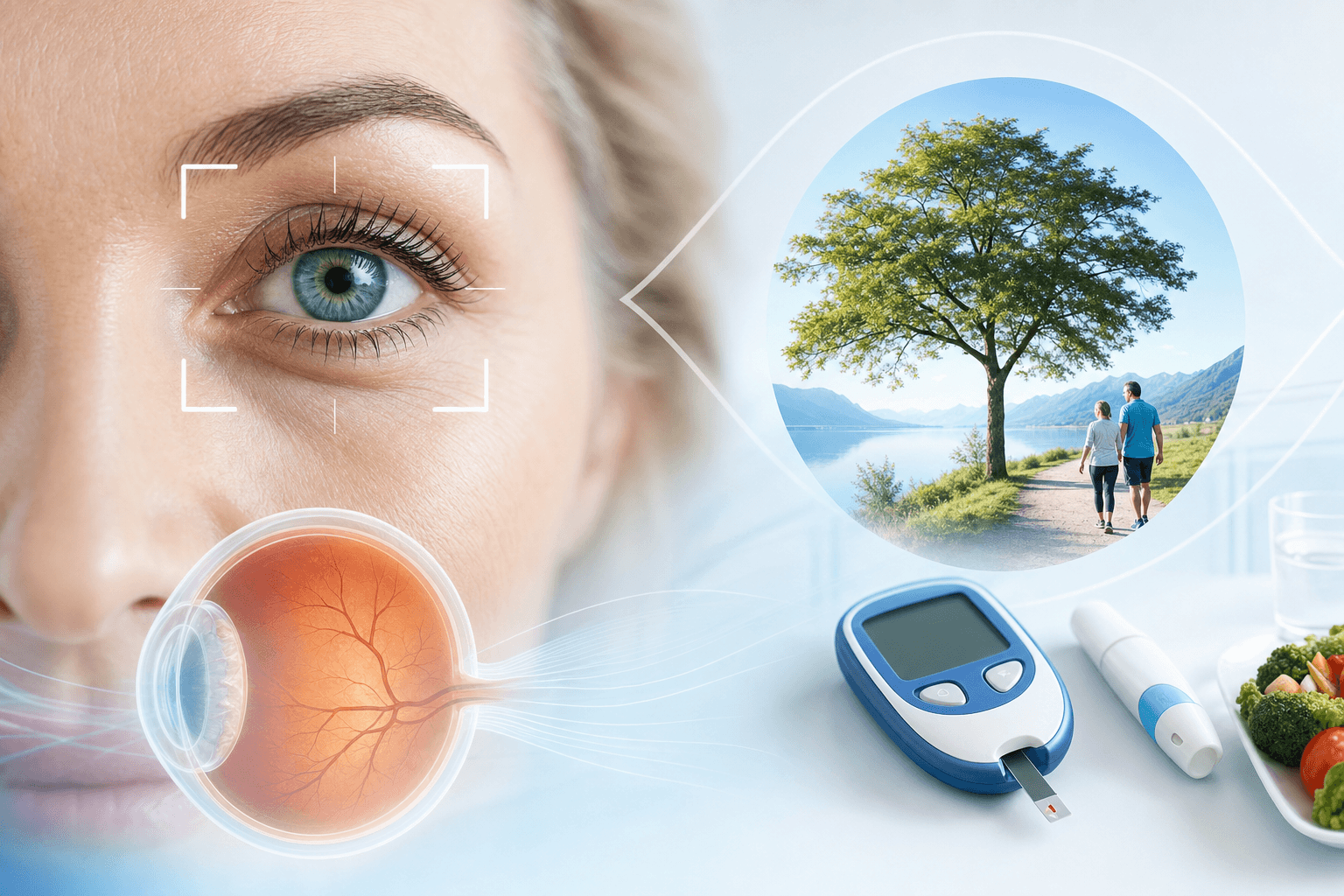
If you live with diabetes, you may have heard that it can affect your eyes. This can feel worrying, but here is the reassuring part: with regular checks and good daily care, most people keep their sight well. Understanding what is happening, and knowing when to act, puts you firmly in control.
What is diabetic retinopathy?
The retina is the thin, light-sensitive layer at the back of your eye. It works a bit like the film in a camera, capturing what you see and sending it to your brain. The retina is fed by tiny blood vessels.
Over time, high blood sugar levels can weaken these small vessels. They may leak fluid, swell, or become blocked. In response, the eye sometimes grows new, fragile vessels that bleed easily. This whole process is called diabetic retinopathy. It usually develops slowly over years, which is exactly why there is so much time to catch it and protect your vision.
Why it often has no early symptoms
Here is one of the most important things to understand: in the early stages, diabetic retinopathy usually causes no pain and no change in your vision at all. Your sight can feel perfectly normal while small changes are quietly beginning at the back of the eye.
This is good news and a gentle warning at the same time. The good news is that the early changes can often be treated very effectively before they ever affect how you see. The warning is that you cannot rely on symptoms alone. The only reliable way to find early retinopathy is a proper eye examination, even when your eyes feel fine.
Warning signs to watch for
While early disease is silent, you should always take the following changes seriously and seek care promptly:
- Blurred or fluctuating vision that does not settle
- Dark spots, shadows, or shapes that seem to float across your view
- A sudden shower of small floaters or specks
- A dark curtain or shadow spreading across part of your sight
- Difficulty seeing at night or trouble with colours looking faded
- Any sudden loss of vision in one or both eyes
A sudden curtain over your vision or a sudden loss of sight should be treated as urgent. Contact an eye professional or your nearest emergency service straight away rather than waiting to see if it improves.
How it is found and treated
A regular dilated eye examination is the cornerstone of protecting your vision. Drops are used to widen the pupil so the eye specialist can see the retina clearly and photograph it. The check is comfortable and painless, though your vision may stay a little blurry for a few hours afterwards, so it helps to arrange a lift home.
When retinopathy is found, there are well-established treatments. Laser treatment can seal leaking vessels and calm the growth of fragile new ones. Injections of medicine into the eye can reduce swelling and leakage. In more advanced cases, a surgical procedure may be offered. The reassuring message is that these treatments are routine, widely available, and most effective when started early, which is another reason regular checks matter so much.
How often should you have your eyes checked?
As a general guide, most adults with diabetes benefit from a retinal examination at least once a year, even with no symptoms. Some people are advised to come more often, for example during pregnancy or if changes have already been found. Your eye specialist will tell you the right schedule for you, so it is worth asking at your next visit.
This article is general education and is not a substitute for personalised advice from your own doctor or eye specialist.
Everyday steps that protect your sight
The same habits that keep your body healthy also protect your eyes. None of these need to feel overwhelming. Small, steady changes add up.
- Keep your blood sugar as steady as you can, following your care team's guidance
- Have your blood pressure and cholesterol checked and managed
- Take your medicines as prescribed, and ask questions if anything is unclear
- Stay active in ways you enjoy, such as walking or swimming
- Eat balanced meals with plenty of vegetables, and watch portion sizes
- If you smoke, getting support to stop is one of the kindest things you can do for your eyes
- Attend your eye appointments, even when your vision feels perfectly fine
In Mauritius, regular screening is increasingly available, and your general practitioner or diabetes clinic can help arrange your eye checks.
A calm, practical takeaway
Diabetic retinopathy is common, but it is also one of the most preventable causes of sight loss when it is caught early. You do not need to be anxious. You need a plan: manage your diabetes day to day, keep up with your eye examinations, and act quickly if your vision changes suddenly.
Think of your yearly eye check as a quiet, powerful form of protection, working for you long before any problem could affect your sight. By staying informed and staying in touch with your care team, you are already doing the most important thing of all to keep your vision clear for years to come.
Clear vision supports a fuller, healthier life. Explore the wider Medtech health ecosystem.